The Ultimate Guide to Wordle Starting Words
In chess, the opening move dictates the entire flow of the match. Wordle is exactly the same. A weak opener leaves you stranded with too many possibilities, while a mathematically superior opener slices the dictionary down to a manageable handful of words.
The Science of a Good Opener
A top-tier starting word does three things perfectly: it avoids duplicate letters, it utilizes high-frequency consonants (like R, S, T, L, N), and it tests at least two common vowels (A, E, I, O).
The Top Contenders
- STARE — This is arguably the most balanced word in the game. It uses three incredibly common consonants and the two most frequent vowels. More importantly, it places the 'S' and 'E' in their most common positions for five-letter words.
- CRANE — Famously popularized by algorithmic analysis, CRANE strikes a perfect balance between testing vowels and exposing common consonant clusters like 'CR'.
- ROAST — If you prefer hunting for 'O' and 'A', this is a phenomenal opener. The 'ST' ending also quickly confirms or denies hundreds of common English words.
- ADIEU — The ultimate vowel-hunter. While it lacks strong consonants, uncovering three vowels immediately gives you the structural skeleton of the hidden word.
The Hard Mode Dilemma
If you play on Hard Mode (where you are forced to use revealed hints in subsequent guesses), you need to be careful with words like STARE. If you get a green 'S' and 'E', you might get trapped in a rhyming vortex (SNARE, SPARE, SHARE, SCARE). In Hard Mode, slightly more obscure openers that test distinct letter combinations can sometimes be safer.
Finding Your Rhythm
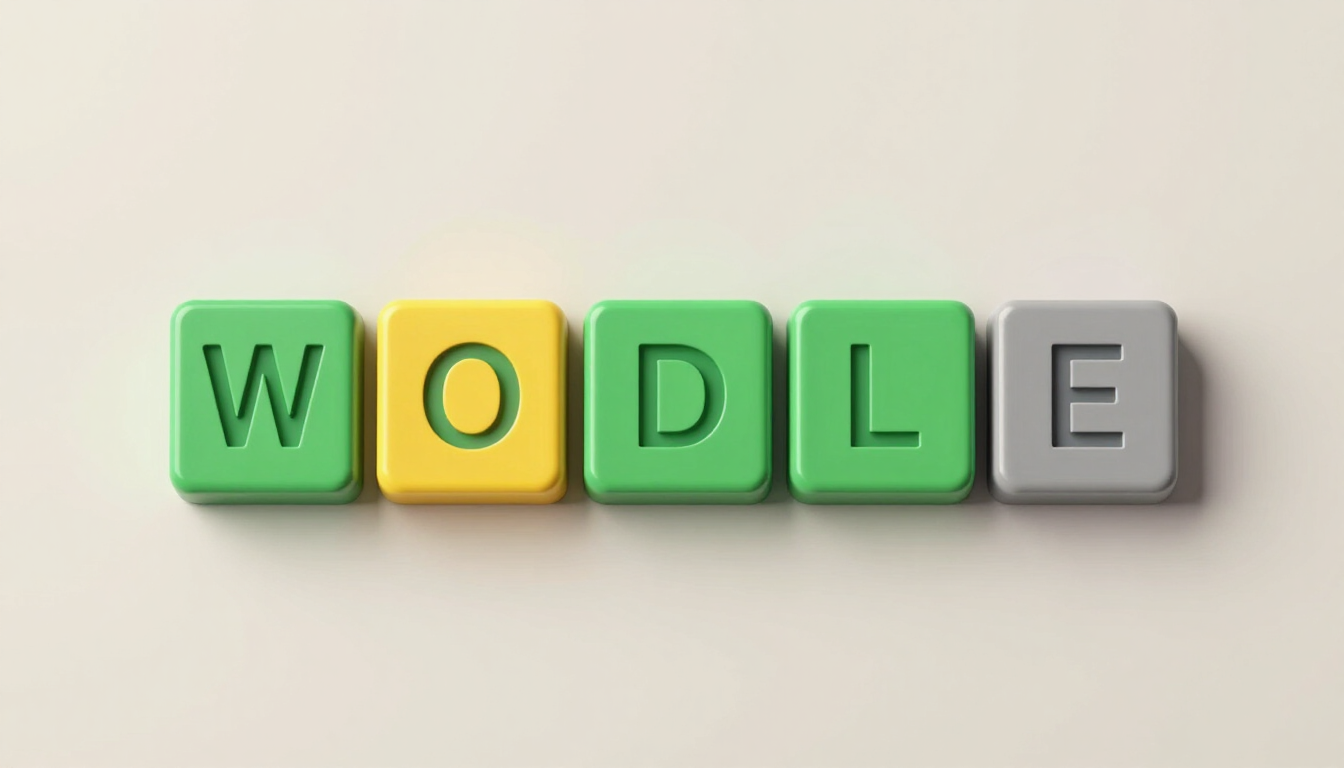
The best strategy is consistency. Pick one of the top-tier words and use it every single day. You will eventually build an intuition for how to follow up based on the specific patterns of yellow and green tiles it produces.